What Is a Wali? The Guardian's Role in Muslim Marriage
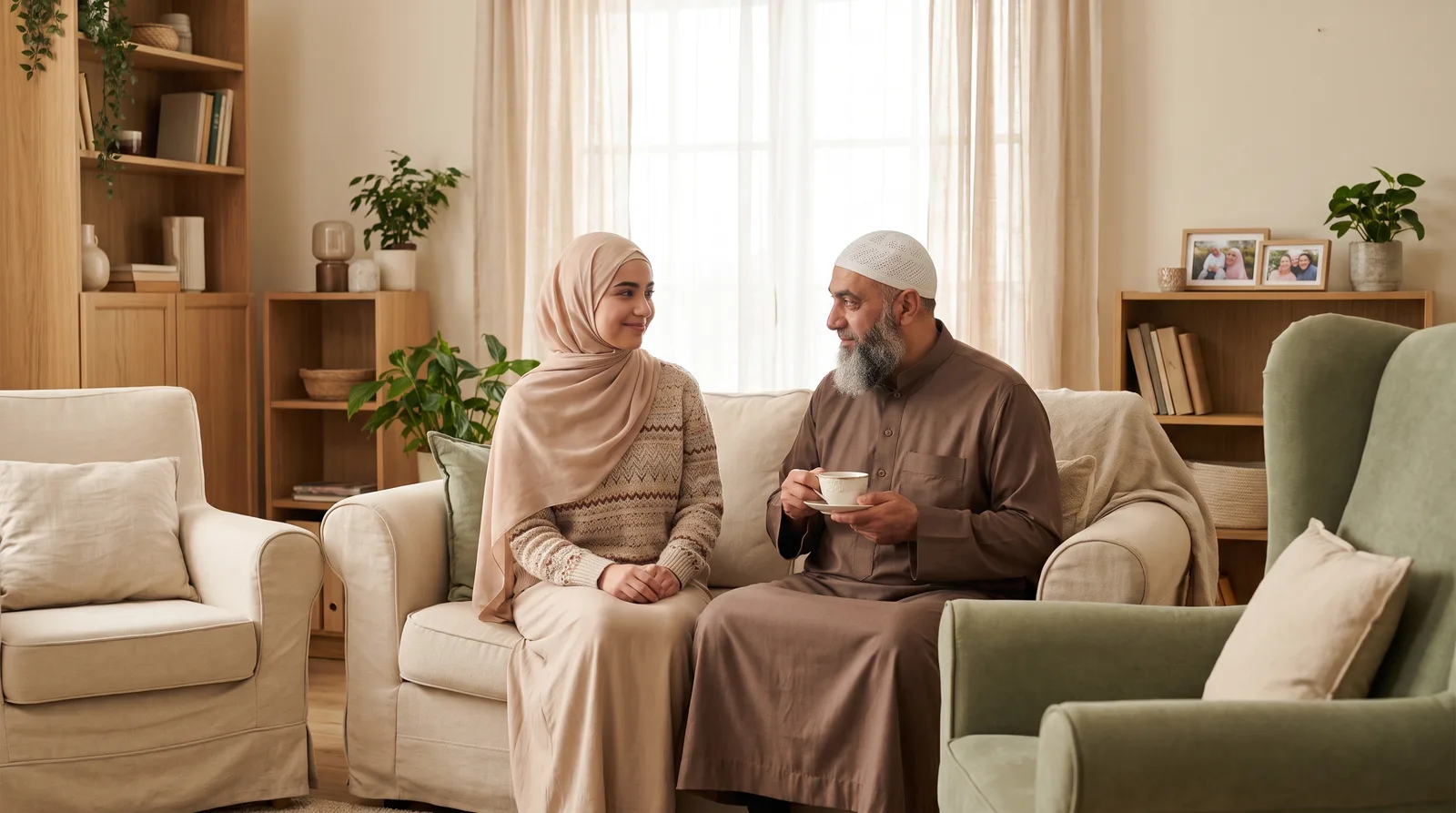
A wali is a guardian who represents a bride in the Islamic marriage contract. Understanding what is a wali, and how that role works in practice, is one of the first things families work through when a son or daughter begins looking for a spouse.
What Is a Wali in Islam?
The word wali comes from Arabic and means guardian or protector. In the context of marriage, the wali acts as the bride's representative when the nikah (marriage contract) is concluded. The role is not about ownership or control. It is about accountability: making sure the woman's interests are protected and that the agreement has proper witnesses.
The hadith scholars most commonly cite on this matter is direct:
"There is no marriage without a guardian."
Sunan Abi Dawud 2085 (graded authentic by al-Albani)
This narration forms the basis of how most schools of Islamic jurisprudence approach the wali's formal role. It sits at the center of how the marriage contract is understood in classical Islamic law, not as a procedural footnote but as a substantive condition.
Does a Woman Need a Wali to Marry?
This is where the schools of thought differ, and it is worth understanding the full range of scholarly opinion rather than assuming one position is universal.
The Maliki, Shafi'i, and Hanbali schools hold that a wali is required for a valid marriage. An adult woman cannot conclude her own nikah without a guardian present. The Hanafi school takes a different position: it permits an adult, sane woman to contract her own marriage without a wali. Even within the Hanafi tradition, involving the wali is strongly encouraged. If the husband is not a suitable match, guardians may have grounds to challenge the contract.
In practice, the vast majority of practicing Muslim families involve the wali regardless of which school they follow. The spirit of the role, protecting the bride and ensuring the union has the support of those closest to her, is valued across all four schools even where the technical requirement differs. Denomination and practicing-level filters on Fazool help you find someone whose religious background aligns with yours from the start, so these conversations happen with the right people and framework.
Who Can Serve as a Wali?
When the father is not available, the role passes through a recognized order. Scholars differ slightly on the sequence between schools, but the general pattern is consistent.
- Father. The default wali, if he is living and Muslim.
- Paternal grandfather. Takes the role if the father is unavailable.
- Brother. Full brother first, then half-brother through the father.
- Paternal uncle. The father's brother, in his order of seniority.
- An Islamic judge or authority. When no eligible male relative is available, or when family members are non-Muslim, the role generally passes to an Islamic judge (qadi) or an imam acting in that capacity. Some scholars also permit a woman to appoint a trustworthy Muslim man. This is especially relevant for converts and reverts.
A wali is expected to be Muslim, sane, an adult, and genuinely acting in the bride's interest. A guardian who is coercive or who withholds consent without valid reason can be challenged. In some juristic frameworks the qadi (judge) can override an unjust guardian. The institution exists to serve the bride, not to constrain her.
"And marry the unmarried among you and the righteous among your male slaves and female slaves. If they should be poor, Allah will enrich them from His bounty, and Allah is all-Encompassing and Knowing."
Surah An-Nur, 24:32 (Saheeh International)
This verse is often read alongside the wali institution as a reminder that facilitating marriage for those who are ready is itself something encouraged and rewarded.
How Does a Wali Stay Involved Online?
Digital marriage apps raise a practical question: how does a wali remain meaningfully involved when conversations happen over a phone or laptop? Fazool addresses this directly through Wali/Chaperone Mode, which lets you invite up to three family members or trusted friends into a read-only view of your profile, your matches, and your conversations.
Chaperones receive notifications and can follow the process as it unfolds. They can raise concerns at any stage. It is a deliberate feature built so that the people a family trusts most can stay informed from the first message through to a match, without anyone needing to be in the same room.
A wali is a protector, not a gatekeeper. His role is to represent the bride's interests and give the marriage a stronger foundation. A guardian who withholds consent without valid reason can be challenged, and no school of jurisprudence treats coercion as acceptable.
Deciding who should serve as wali and how involved they should be is worth discussing openly before the search begins. The post on questions to ask before marriage covers what to work through on faith, family expectations, finances, and lifestyle before moving toward a decision.
Related: What Is Fazool? | What Is Chaperone Mode? | Questions to Ask Before Marriage | Approaching a Muslim Family for Marriage