How to Approach a Muslim Family for Marriage
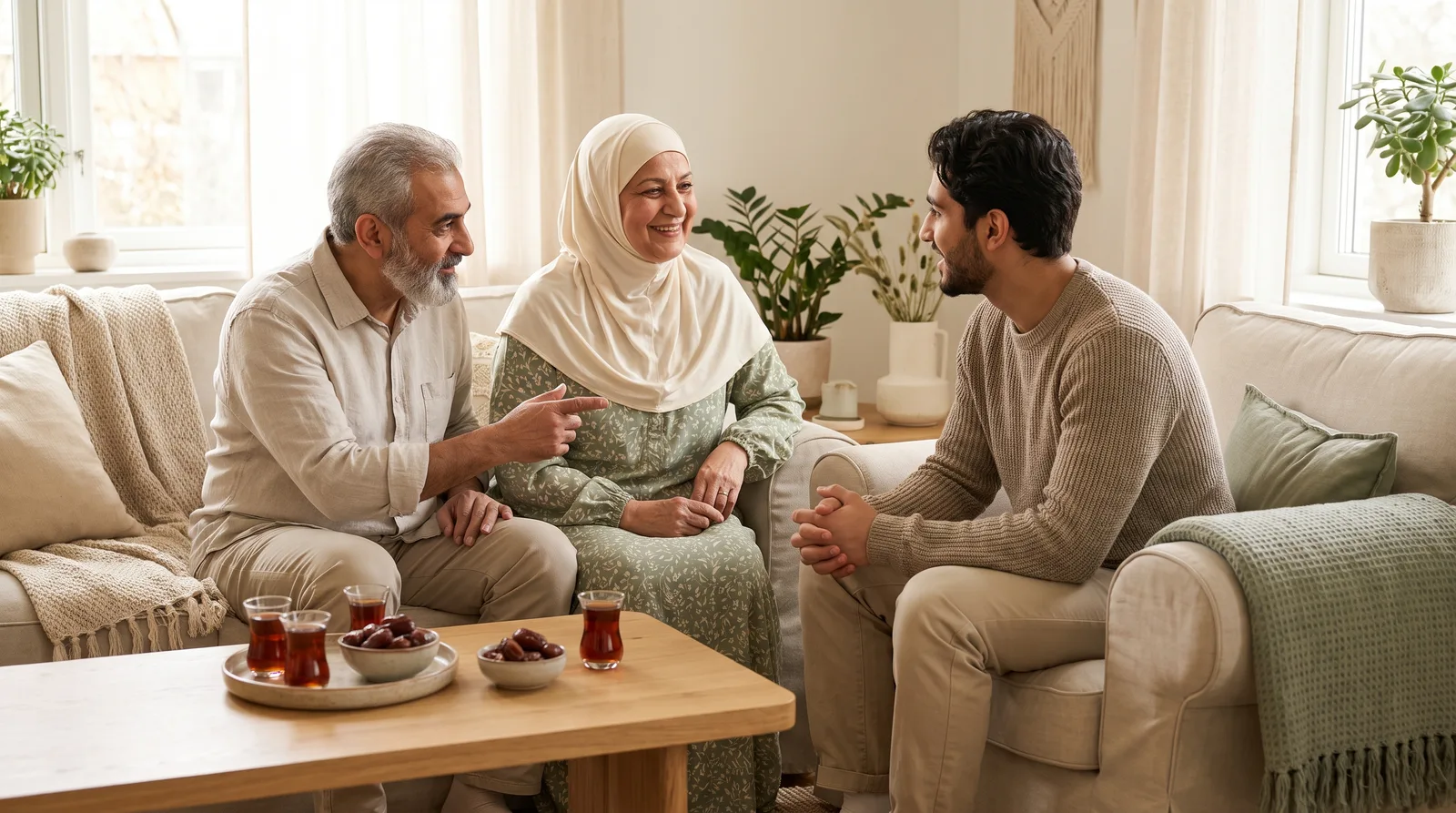
Knowing how to approach a Muslim family for marriage is something most people work out by trial and error, and a lot of the errors are avoidable. Different families have different expectations, and what works in one community might not land the same way in another. But there are principles that hold across most situations: involve your own family early, be transparent about your intentions from the first contact with hers, and treat every step as something her family will eventually hear about.
How Do You Tell Your Parents You Want to Marry?
Tell them directly and before things get serious. The most common mistake is waiting until you are emotionally invested in a specific person and then asking your parents for approval under pressure. That creates resistance, because they feel they are being presented with a decision rather than invited into a process.
Starting the conversation while you are still looking, before there is anyone specific to discuss, gives your parents time to share their own expectations. Be honest about how you found the person if the subject comes up. Parents who are skeptical of online searches usually come around when they can see a verified profile, speak with the other family, and watch the process unfold with appropriate involvement rather than being excluded from it.
Allah describes the purpose behind marriage in the Quran:
"And of His signs is that He created for you from yourselves mates that you may find tranquillity in them; and He placed between you affection and mercy. Indeed in that are signs for a people who give thought."
Ar-Rum, 30:21 (Saheeh International)
That tranquillity tends to be built on a foundation where families are aligned from the beginning, not brought in after the fact.
How Do You Approach Her Family?
This is two families joining, not just two individuals.Every step of the process is observed and remembered by both families. Approaching it that way from the start sets the tone for the marriage itself.
The first contact should come through the right channel. In most communities that means asking your family or a mutual contact to make the introduction rather than reaching out directly. A cold approach to her family without any prior connection tends to create wariness, no matter how well-intentioned.
Once contact is established, prepare seriously for the first meeting. Come with clear answers to the obvious questions: your work, your family background, your faith practice, your timeline, and what you are offering. Her parents have known their daughter for her whole life. They are not just evaluating you as a match for her; they are evaluating whether you can be trusted. A first meeting that goes poorly because of poor preparation can delay a process that might otherwise be straightforward.
Come ready to ask questions too. The list of questions to raise before marriage is worth working through with your own family first, so you know what you actually need to know and can answer equivalent questions when her family asks them.
The Quran encourages facilitating marriage broadly:
"And marry the unmarried among you and the righteous among your male slaves and female slaves. If they should be poor, Allah will enrich them from His bounty, and Allah is all-Encompassing and Knowing."
An-Nur, 24:32 (Saheeh International)
Her family facilitating the marriage means taking the process seriously, not treating it as a gatekeeping exercise. Your approach should make that easy for them.
Should You Involve a Wali Early?
Yes. Involving the wali (guardian) early is one of the clearest signals that you are serious. It changes the tone of the entire process. When her family sees that you are willing to conduct everything through proper channels, with her guardian aware and involved from the beginning, it creates trust in a way that no amount of good conversation can substitute for.
Read the full explanation of what a wali is and what his role involves if you are uncertain about how the responsibility works. The wali is not just a formality to satisfy at the nikah; his involvement in the process before the ceremony is what makes the whole thing feel coordinated rather than rushed at the end.
The practical challenge is making that involvement work in real time, especially when families are geographically spread out. Fazool's Wali/Chaperone Mode was built for exactly this: up to three family members can be invited with read-only access to a user's profile, matches, and all conversations. A wali or parent gets ongoing visibility from the first match rather than a summary after things are already well along, so families feel included rather than briefed.
Related: What Is a Wali? | What Is Chaperone Mode? | Questions to Ask Before Marriage