Questions to Ask Before Marriage in Islam
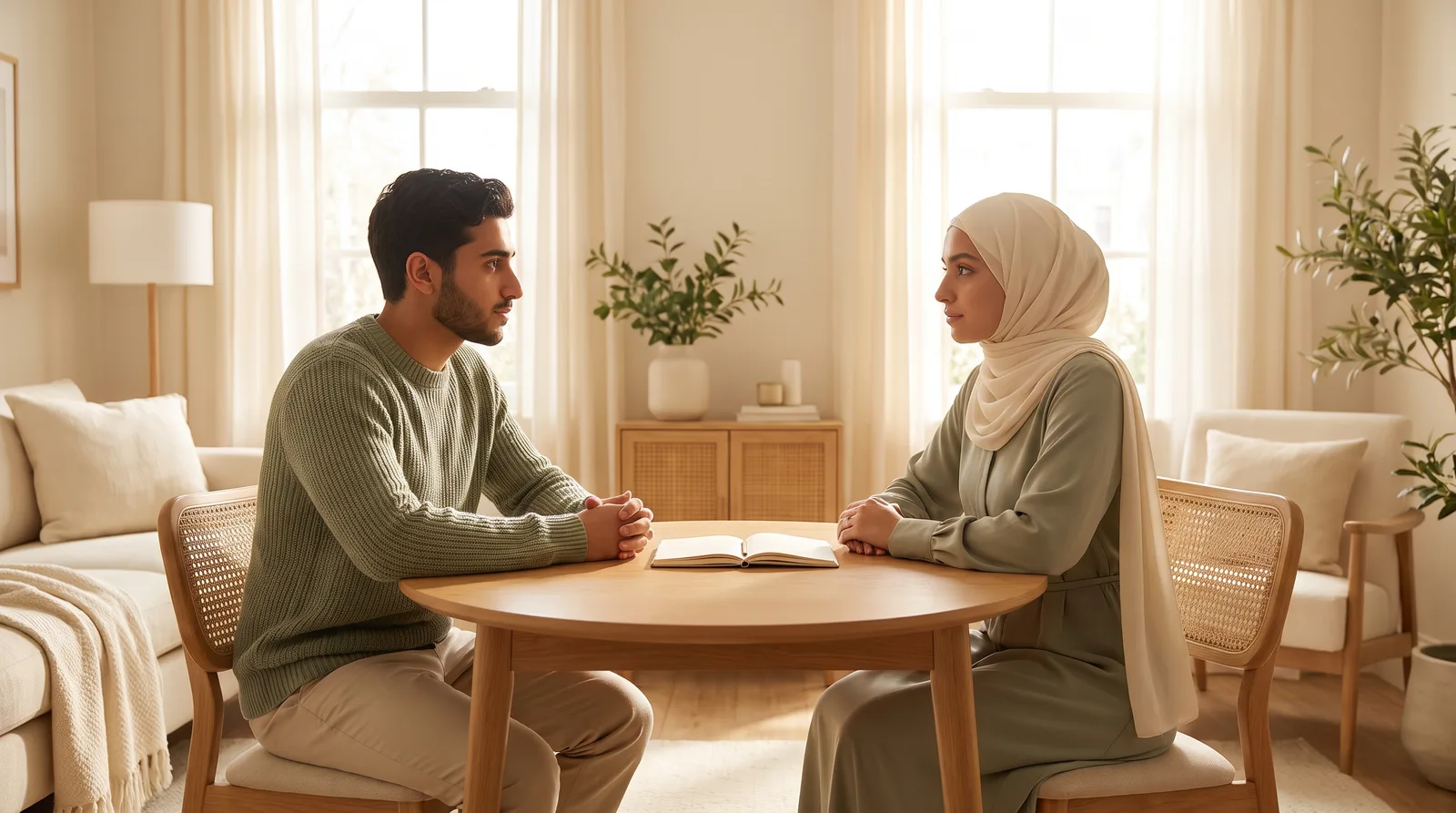
Knowing which questions to ask before marriage in Islam can make the difference between a courtship that leads somewhere meaningful and one that drifts without clarity. Many people spend weeks in conversation and still feel like they have not reached the substance of what they actually need to know.
What Should You Ask Before Getting Married?
The hadith from Abu Hurayrah gives a useful starting point:
"A woman is married for four things: her wealth, her lineage, her beauty, and her religion. So choose the one who has religion."
Sahih al-Bukhari 5090
The hadith lists four factors people commonly use to evaluate a potential spouse, then lifts one above the rest. That is not permission to ignore everything else. It is a reminder of what holds a marriage together when the rest changes over time. Starting with deen makes the rest of the conversation easier to anchor.
Start with how someone actually lives their faith, not just what they claim on a profile.
Faith and practice
- Prayer and consistency. Do you pray regularly? How do you manage that when work or travel makes it difficult?
- Growth in deen. How important is continuing to learn and grow in knowledge? How do you approach mistakes and repentance?
- Modesty and values. What does modesty mean to you in daily life, and how does it show up practically?
- Weekly rhythm. What does a typical Friday or weekend look like in terms of religious practice?
Family and expectations
- Closeness to parents. How close are you to your parents, and what does that relationship look like after marriage?
- Proximity and extended family. Do you expect to live near family? How does extended family fit into a shared life?
- Decision-making. How do you see decisions being made between the two of us and our families?
- Family expectations. What are your parents' expectations of a future spouse?
On Fazool, denomination and practicing-level filters help narrow the search before a conversation starts, so these questions become a way to go deeper rather than figure out the basics.
What Questions Reveal Real Compatibility?
There is a category of question that people often avoid because it feels too direct too soon. These are usually the most important ones. They tell you whether two people are imagining the same life or just enjoying the same conversation.
"Our Lord, grant us from among our wives and offspring comfort to our eyes and make us a leader for the righteous."
Surah Al-Furqan, 25:74 (Saheeh International)
That supplication imagines a family built on shared values and shared purpose. The questions below are how you find out whether someone else is building toward the same thing.
Children and parenting
- Want and timing. Do you want children? Roughly how many, and how soon after marriage?
- Religious upbringing. How do you envision their education and practice: Islamic school, home guidance, a mix?
- If it is difficult. If having children were unexpectedly hard, how would you want to approach that together?
Finances
- Work expectations. What are your expectations about who works and how, now and after children?
- Money habits. How do you manage money in practice: saving, spending, giving to family?
- Mahr. What does mahr mean to you, and is it something you want to discuss early?
Lifestyle and daily life
- Where to live. Where do you want to live, and how open are you to moving if circumstances change?
- How you recharge. What does a good weekend actually look like? How do you spend free time?
- Community. What role does the mosque, social circles, and volunteering play for you?
Fazool's dealbreaker feature gives both sides a structured way to surface important information at the right moment rather than discovering a major incompatibility after real feelings develop. The post on how dealbreaker disclosures work explains exactly how that process functions.
How Personal Should the Questions Get?
Personal enough to matter, but not so clinical that the conversation feels like an interview. The goal is to understand character and values, not to run through a checklist.
Some of the most revealing exchanges come from hypotheticals: "What would you do if..." or "How did you handle it when...?" Stories tell you more than direct answers. Questions about previous marriages, significant health matters, or religious journey can and often should come up. Many scholars hold that honest disclosure of material information is an obligation before a marriage contract.
Be honest rather than performing. The person across from you is trying to make the same decision you are. Presenting a polished version of yourself only delays finding out whether this is actually a match.
Family involvement helps here too. A wali or trusted family member who has met the person can surface observations that individual conversations miss. The guide on finding a practicing Muslim partner covers how to approach that search thoughtfully.
Related: How Dealbreaker Disclosures Work | What Is a Wali? | Istikhara for Marriage | Finding a Practicing Muslim Partner