How Masjids, MSAs and Community Groups Promote Events Online
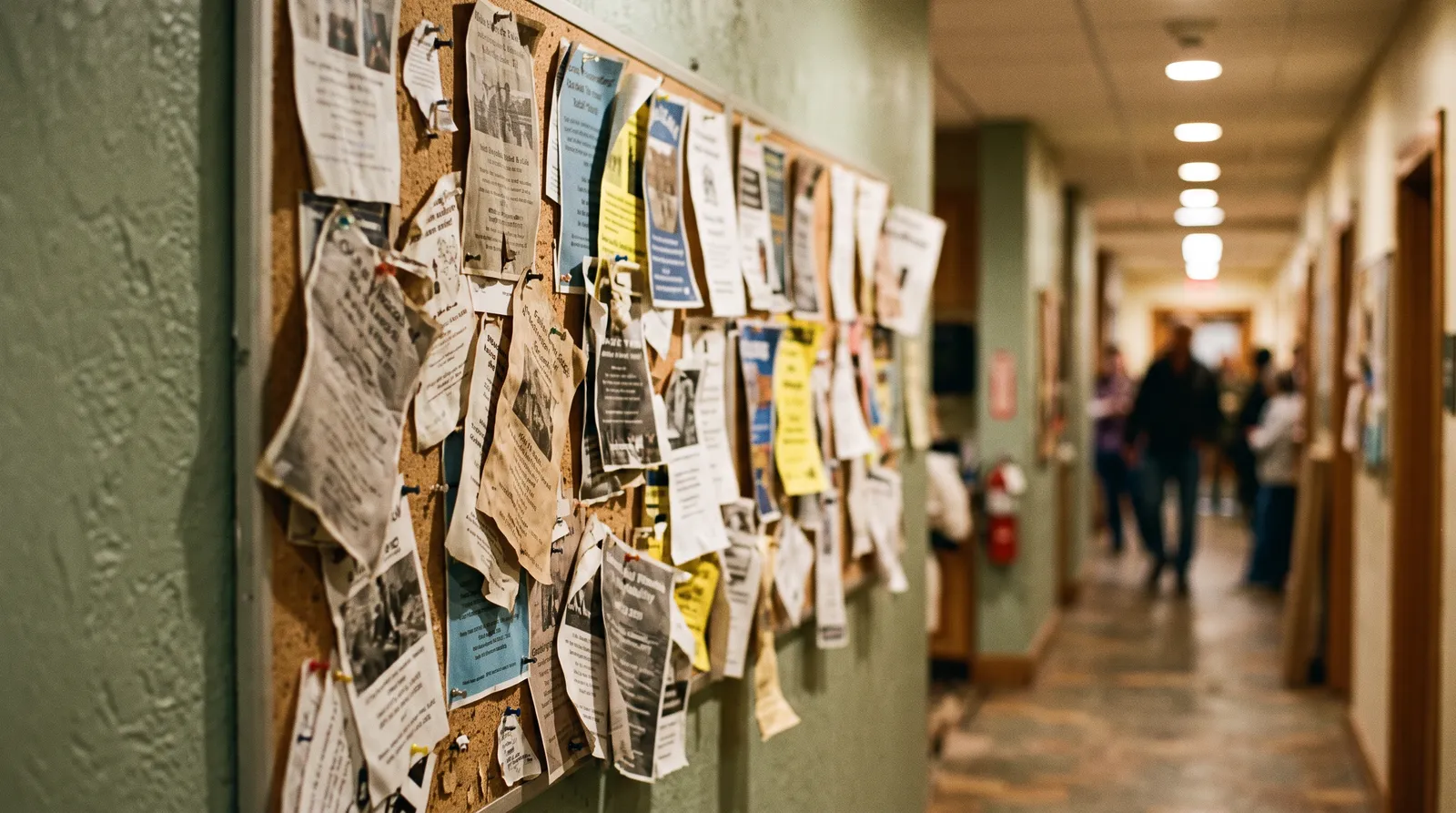
Most community events are promoted the same way. Somebody makes a graphic in Canva, it goes on Instagram, it gets forwarded into two or three WhatsApp groups, and then everyone hopes. Attendance is whatever it is, nobody knows why, and the same thing happens next month.
That approach is not wrong so much as incomplete. It solves announcing and does nothing about the four other problems standing between an announcement and a full room.
An announcement decays, a page does not
A post is an event in time. It appears, it gets some attention over about eighteen hours, and then it is buried under everything posted since. Somebody who follows you but was busy that evening will very likely never see it. Somebody who hears about your masjid three weeks later has no way to find it at all.
A page behaves differently. It sits at one address, it is there in three weeks, and it can be found by somebody searching rather than only by somebody already following you. That is the difference between reaching your existing audience and reaching the people who have not found you yet, which for most masjids and MSAs is the larger group by a wide margin.
You want both. Post the graphic. Also have somewhere for the graphic to point.
A screenshot cannot answer a question
Watch what happens under any event graphic posted to a community account. The comments are always the same four questions.
Is it brothers only or is it mixed. Is food provided and is it halal. Can I bring my kids. Do I need to pay, and if so how.
Every one of those goes unanswered until a volunteer sees the comment and replies, which might be hours. Meanwhile the people who did not want to ask publicly have already decided not to come. This is a much larger group than the people who ask, and you never hear from them.
A page can answer all four before anyone has to ask. On Fazool these are settings rather than sentences you have to remember to write. You set the audience and the halal food flag when you create the event, and they appear on the card, in search results, and in the reminder that goes out the day before.
You cannot plan for a number you do not have
Ordering food for an unknown number is how community budgets get wasted. Order for eighty and forty come, and you have paid for forty meals nobody ate. Order for forty and eighty come, and you have a worse problem.
Reactions on a post are not a number. A heart costs nothing and commits nobody. An RSVP with a real capacity limit is different, because it asks for a decision and it closes when it is full.
The second thing a real list gives you is a door process. Instead of a volunteer with a printed sheet trying to find names, you open the roster on a phone and tap people in as they arrive. Afterwards you know how many said yes, how many came, and who did neither, which is the only way to get better at estimating next time.
Reminders recover the people you already convinced
Most people who say yes and do not turn up are not flaking. They forgot, because they committed eleven days out in a group chat that has since scrolled a long way past it.
If you are sending reminders by hand, that is one message the day before and one an hour ahead, at two specific times, for every event you run. Most organizations do it once and then quietly stop. Automating it recovers a meaningful share of your gap for no ongoing effort. Everyone who said yes on Fazool gets both, and you send nothing.
How do you reach people who do not follow you?
You make the event findable rather than only broadcast.
A public event page is indexed, so somebody searching for what is on in your city can land on it without knowing your masjid exists. That is the entire mechanism by which a community group grows past the people who already know about it. An Instagram post cannot do this, because Instagram is not where people search for something to do on Saturday.
The other half is being in a place people already look. A city listing that carries every Muslim event in the area gets browsed by people who have not chosen a masjid yet, including students who just moved and families who just relocated. Being on it costs nothing and puts you in front of exactly those people.
Should we still use WhatsApp?
Yes. WhatsApp is where your committed core lives and it is not going anywhere.
The change is what you send into it. Sending a graphic means every question comes back to whoever posted it. Sending a link means the link answers the questions, holds the RSVP list, and can be forwarded onward into groups you are not in. A forwarded screenshot is a dead end. A forwarded link is a working invitation, and it will unfurl properly with the title, the time and the area when somebody pastes it.
What about recurring events?
Recurring events are where most organizations lose the most attendance, because the weekly halaqa gets announced properly for the first month and then stops being announced at all. Everyone assumes the regulars know, and the regulars mostly do. Nobody new ever joins.
Give the recurring thing a real page each time it runs. It costs a minute, it keeps the event findable for anyone searching that week, and it gives you attendance numbers over time, which is the only way to notice a slow decline before it becomes an empty room.
Volunteers should not need your account
The person who runs the door is rarely the person who created the event. In most organizations this is solved by sharing a login, which is bad for obvious reasons, or by one person being personally responsible for showing up to every single thing.
Co-hosts fix it properly. Add the volunteers who actually work the event and they get the roster and the check-in without getting your account or your messages. When somebody moves on, you remove them and nothing else changes.
Photos are next month's promotion
The most effective thing you can post about an event is a picture of the last one.
A graphic tells people an event exists. A photograph of thirty people sat around a table tells them it works, that other people go, and that they will not be the only one there. That last worry is the single biggest silent reason people do not attend something new, and no amount of copywriting addresses it as well as one honest photo of a full room.
On Fazool the attendees add these themselves to a recap album on the event, so it is not another job for a volunteer.
Where to start
Do not restructure everything. Pick the next event you already have planned and give it a page. Post the graphic as you always would, and point it at the link. Then look at the numbers afterwards and decide whether it was worth it.
Hosting on Fazool is free for organizations. There is no listing fee, no charge per attendee, and no cut taken if you sell tickets, because the money never passes through us. Masjids, MSAs and organizations can also get a profile that collects every event under one name, so people can follow the organization rather than remembering to check.
Host an event, or see what is already on in your city.
Related: How to host an event people actually show up to | What is Fazool?