Is Dating Haram? How Courtship Works in Islam
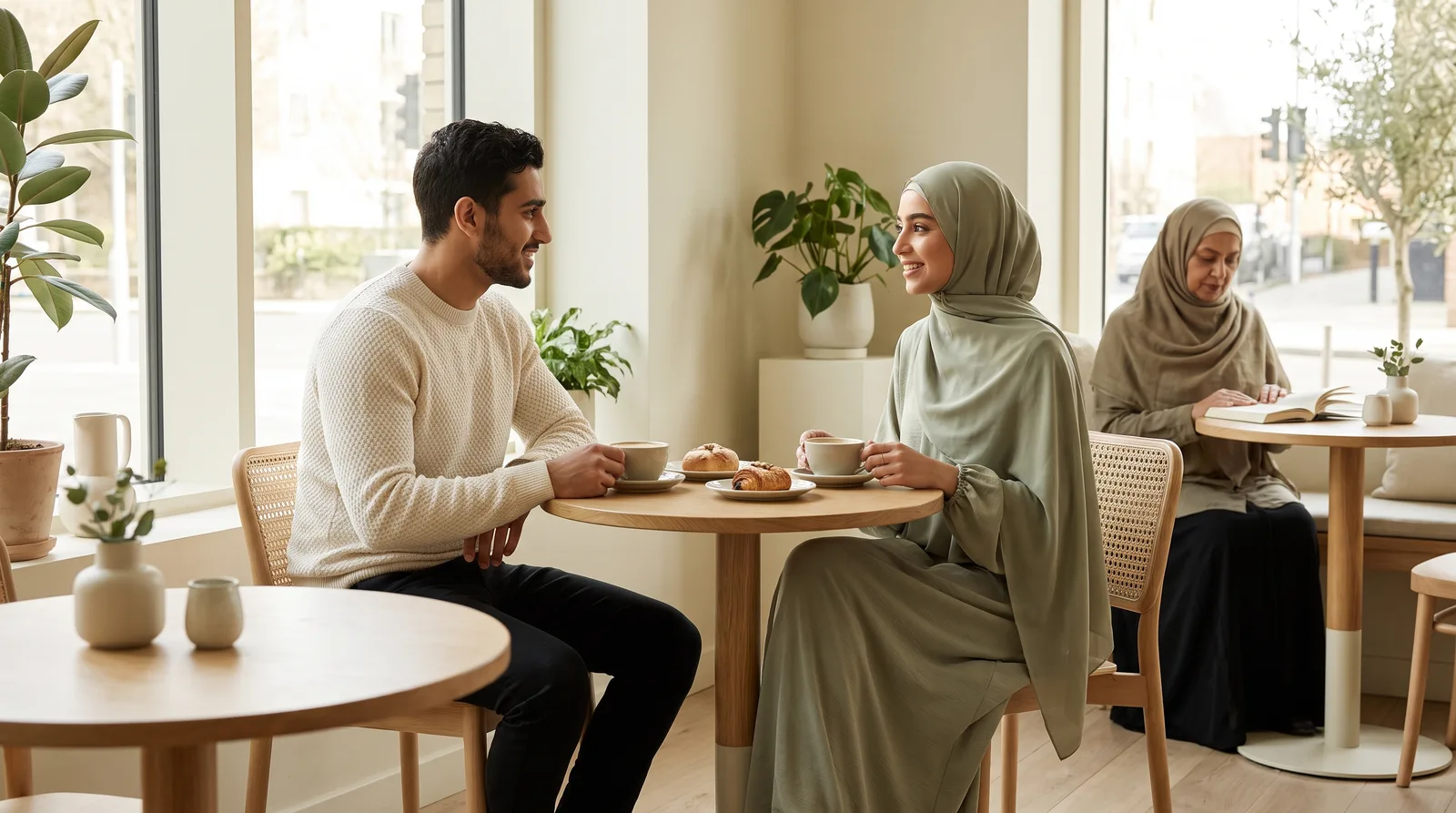
Is dating haram? For many Muslims in the West, this question comes up early and often, caught between a culture where dating is treated as normal and a religious tradition that draws a real line between purposeful courtship and casual romance. The honest answer depends heavily on what "dating" actually means in practice.
Is Dating Haram in Islam?
Most scholars hold that casual dating, meaning romantic involvement with no intention of marriage, in private settings, without family awareness, is not permitted in Islam. The concerns they raise are consistent: the risk of unlawful seclusion, the emotional and physical consequences that often follow, and the absence of any serious intention on either side.
Islam asks both men and women to be intentional about how they interact:
"Tell the believing men to reduce [some] of their vision and guard their private parts. That is purer for them."
Surah An-Nur, 24:30 (Saheeh International)
"And tell the believing women to reduce [some] of their vision and guard their private parts."
Surah An-Nur, 24:31 (Saheeh International)
These verses are not commanding blindness. They are asking for intentionality: that interactions between men and women be kept modest and purposeful rather than casual and unguarded.
Purposeful courtship toward marriage is a different matter entirely. When two people are evaluating whether they want to marry, with family involved or at least informed, and with clear intent on both sides, many scholars see that as not only permissible but necessary. You cannot make a sound decision about marriage without genuine conversation.
What Is the Difference Between Dating and Courtship?
The difference is intention and structure, not just the label you give it.
Dating, as it functions in most Western contexts, is exploratory and open-ended. There is no particular destination and often no expectation that the relationship will lead anywhere specific. Courtship in the Islamic sense is purposeful from the start. You are asking a real question: is this a person I could build a life and raise a family with?
Structure matters as much as intention. Traditional Islamic courtship typically involves family in the process, does not rely on secrecy, and carries a shared understanding on both sides that marriage is the goal. That is genuinely different from months of private, family-unaware communication with no stated intention.
Marriage in Islam is described in the Quran as something beautiful and deeply meaningful:
"And of His signs is that He created for you from yourselves mates that you may find tranquillity in them; and He placed between you affection and mercy. Indeed in that are signs for a people who give thought."
Surah Ar-Rum, 30:21 (Saheeh International)
The difference is intention and structure, not just the label. Casual dating is exploratory with no stated destination. Halal courtship is purposeful from the first conversation: the question is whether this person is someone you could build a life with.
Can You Talk to Someone Before Marriage?
Yes. Many scholars say it is encouraged, and the Prophet Muhammad, peace be upon him, recommended that prospective spouses see and speak with each other before agreeing to marry. Making a decision as significant as marriage without genuine conversation is generally considered unwise.
The hadith from Ibn Mas'ud makes plain that marriage is the goal and that the process of getting there should be pursued actively:
"O young people! Whoever among you is able to marry should marry, for it helps him lower his gaze and guard his chastity. And whoever is not able to marry should fast, for fasting will diminish his desire."
Sahih al-Bukhari 5065
How those conversations should happen is where views vary. Many scholars advise keeping a family member or trusted friend aware of the communication. Wali/Chaperone Mode on Fazool makes this practical in a digital context. You can invite up to three family members or trusted friends into a read-only view of your profile, matches, and conversations so nothing is happening behind closed doors.
How Do You Court the Halal Way?
A few principles come up consistently across scholarly opinion on what halal courtship looks like in practice.
- A clear intention of marriage. Both people know from the start that marriage is the goal, not casual exploration.
- A wali or chaperone involved. The bride's guardian is present or informed, and a third party can follow what is happening.
- Families aware. The process is not hidden. Both families are at least informed, if not actively involved.
- No seclusion. Private in-person meetings without a third party present are avoided, especially early on.
- Moving at a serious pace. The process allows genuine evaluation without drifting indefinitely without a decision.
Fazool is built around this kind of intentionality. Every user is ID-verified, and there are five likes per day, five active matches, and a four-day conversation expiry. Scheduled voice and video calls let you talk naturally while staying inside a platform designed for this purpose. Going in with a clear set of questions prepared helps those conversations go somewhere real.
The question "is dating haram" does not have a single answer because the word carries very different meanings. Casual, private, no-intention romance is not what Islam encourages. Structured, family-aware, purpose-driven courtship toward marriage is a different thing entirely, and Islam has always made room for it.
Related: What Is a Wali? | What Is Chaperone Mode? | How Calls Work | Questions to Ask Before Marriage